Floating at Pedra de Lume – What the Salt Does, and What €5 Buys
Updated September 24, 2026 · 7 min read
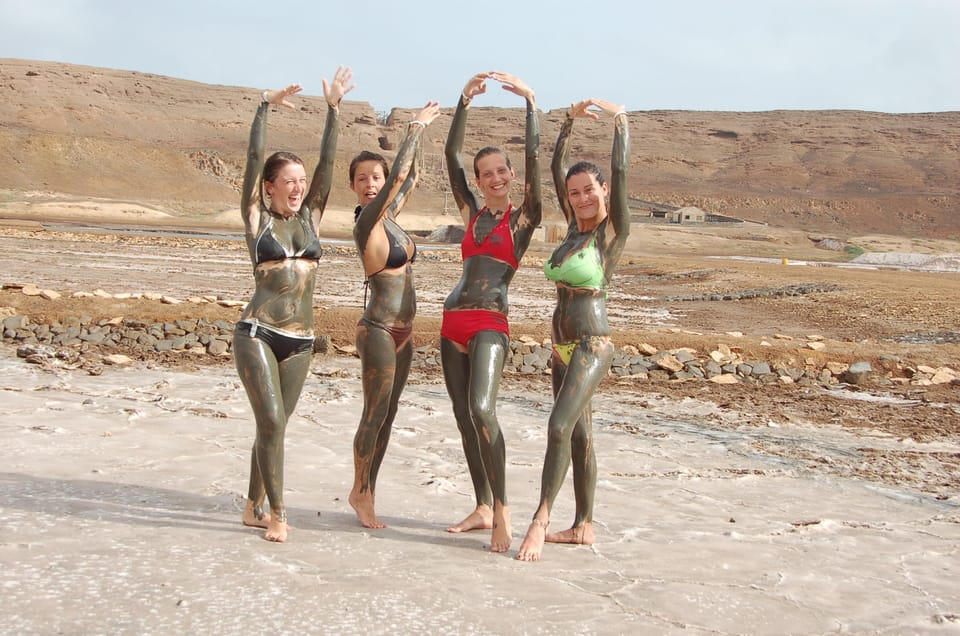
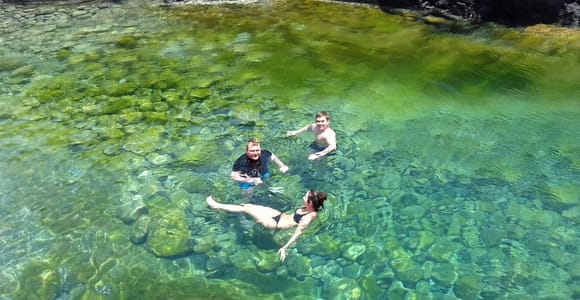
Sal has one experience that does not exist anywhere else on your holiday list: lying on the surface of a salt lake in a volcanic crater without any effort to stay there. Everything else on this island has a version somewhere closer to home. This does not.
It is also the activity most often booked without knowing what it involves, which is why people arrive with a towel and no plan for the hour afterwards.
What the water actually is
Pedra de Lume is the crater of an extinct volcano on the northeast coast. On its floor lie about four hectares of salt pans, reached through a tunnel cut through the crater wall in the nineteenth century, which is still the only way in. The pans sit well below the surrounding ground, so you walk out of bright glare into a bowl that is noticeably still.
The water’s salinity is given as 27 to 30 per cent. Open Atlantic seawater is about 3.5 per cent. That difference is the whole experience: at that concentration a body does not sink, and the effort of swimming is replaced by the odd problem of not being able to put your feet down.
Two numbers circulate about this place and both deserve care. Guidebooks and listings repeat that the water is “26 times saltier than the sea”, which does not square with the salinity figures those same pages give – the percentages are the number to trust. And four of the island tours describe the lake as “the world’s second-saltiest water”. Treat that as a selling line rather than a measurement; there are saltier bodies of water on the planet, and the lake is remarkable without the ranking.
Floating is pleasant for about twenty minutes
Longer than that and most people have had enough. The salt draws water out of the skin, the sun reflects off a white crust in every direction, and there is very little shade in the crater.
The one rule worth remembering is about your eyes. The site’s own advice is direct: be careful not to get the water in them, and if it happens, do not rub – rinse with clean water. Bring a bottle for exactly that. Any graze, shaving cut or sunburn will also announce itself the moment you get in, which is worth knowing before rather than after.
And you will want to rinse off afterwards. The salt dries to a fine white film on skin and swimwear. Showers at the site cost €1 to €2 and are not included in the entrance fee – that small detail is the difference between a good afternoon and a sticky drive back.
Four ways to book it, and what each one is really for
Go on your own. Entry to the crater is around €5, which covers the float. The site is open roughly 9am to 5.45pm. This is the cheapest route and the only one that lets you stay as long as you want.
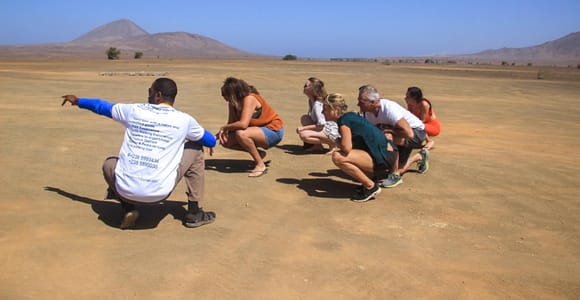
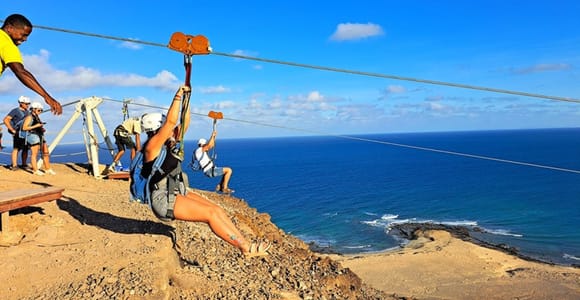
As a stop on an island tour. Almost every circuit includes it: the three-hour salt lake and Shark Bay tour at €29 is the shortest, the six-hour highlights tour with lunch at €45 the most comfortable. Your time in the water then runs to the driver’s schedule rather than your own, and in exchange you get the other sights on the loop and a driver. There are 55 such tours from €27.
The dedicated wellness trip. The Pedra de Lume wellness and relaxation experience runs 4.5 hours at €52 and rates 4.4 stars from 44 reviews. It is the version built around the crater rather than passing through it.
Private. A two-hour private wellness and heritage visit costs €150 and has 9 reviews at five stars. That is the price of having the guide to yourself, and for two people sharing it is a different calculation than for one.
If it is the spa rather than the crater you are after, a spa day with sound bath and buffet in Santa Maria runs four hours at €68 – though it is new to the catalogue and has no reviews yet, which is worth factoring in.
What “wellness” means here, and what it does not
The listing for the wellness trip promises “therapeutic, curative, and slimming treatments inside the volcano”. That is the operator’s wording, and the last of those three is advertising rather than a result. There are massages and treatments available at the site for a separate fee, and floating in dense salt water is genuinely relaxing on tired legs.
What it is not is medicine. If you have a skin condition, high blood pressure, a heart condition or an open wound, the person to ask is a doctor or pharmacist before you travel, not a tour listing and not this page.
The other half of the ticket is industrial history
The crater was not opened for tourists. The merchant Manuel António Martins began working the salt here in 1796; the tunnel followed in 1804 and a port in 1805, and the white and blue chapel by the pans dates from 1853. Brazil’s prohibitive salt duties in 1887 broke the trade the place was built on. Estimates of what is still in the ground run past fifty million tonnes.
The site has been a protected landscape since 2003, went onto Cape Verde’s UNESCO tentative list in 2004, and was designated part of the country’s natural, historical and cultural heritage in 2012. The wooden gantries and evaporation basins you walk past are the remains of an industry, not decoration, and the food and culture tours from €25 are where that thread continues.
Who should not bother
If you have small children, the crater is a hot, glaring bowl with salt water that stings eyes. Twenty minutes is fine; an afternoon is not, and the sheltered bay at Santa Maria is the better plan for a whole day.
If you dislike the feeling of not controlling your own buoyancy, you will not enjoy this, and the snorkelling and diving trips from €28 use water that behaves normally.
And if you are already booked on an island tour, do not book the crater twice. That mistake happens often enough on this island to be worth a sentence: check what your circuit includes before you pay a second time.