Cachupa, Morna and the Pier at Ten – Where the Real Cape Verde Is on Sal
Updated September 24, 2026 · 6 min read
Sal is the island most Cape Verdeans would name last if you asked them where to find Cape Verde. It is flat, dry, and its economy is aviation and tourism – the international airport is here, and the resorts run along the south coast. The culture other islands are famous for grew in the green valleys of Santiago and the bars of Mindelo, not on a salt pan in the Atlantic.
That is worth saying out loud, because it changes what you should go looking for. On Sal the culture is not a landscape you drive to. It is a kitchen, a pier and a Saturday night, and all three are easy to walk past.
Cachupa is the meal, not a dish on the menu
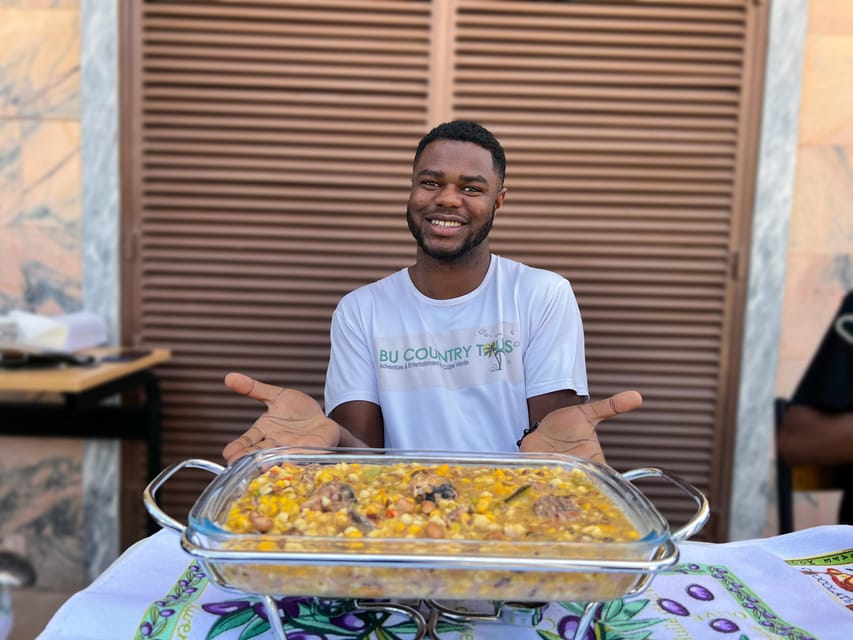
Cachupa – katxupa in Kabuverdianu, the Creole that people actually speak here, as opposed to Portuguese, which is what they write – is the national dish of Cape Verde, and it is a slow stew built on maize and beans. Everything else is negotiable.
That negotiation has a name. Cachupa rica is the version with meat in it, several kinds if the household can manage it. Cachupa pobre is the one made with fish. The distinction is exactly what it sounds like: the rich version costs more, and for most of the islands’ history it was the version most families could not make. A dish that carries its own class history in its name is not a tourist invention.
The most-booked cultural activity on Sal is a cachupa cooking class with a local family – €35, two hours, 102 reviews. Two hours is enough to make it and eat it, not enough to do it the slow way, and that is the honest trade. What you get instead is somebody’s actual kitchen, which is the part a restaurant cannot sell you.
The music was recognised by UNESCO, and it is not all the same music
If you know one Cape Verdean thing, it is probably morna – slow, sung, melancholy, the genre Cesária Évora carried around the world. In 2019 UNESCO inscribed it on the Representative List of the Intangible Cultural Heritage of Humanity, describing it as a practice that joins voice, music, poetry and dance rather than a style of song.
It is not the only one, and the others are more fun:
- Coladeira grew out of morna and went the other way – faster, lighter, with words that tend towards the cheerful and the sly.
- Funaná is built on the accordion and is the one that empties chairs.
- Batuko began as women’s music, improvised, with lyrics that were satirical or openly critical. It is the oldest of the four and the least likely to turn up in a hotel lobby.
A Cape Verdean buffet with live music and dance in Santa Maria runs three hours from €40 and does what it says: food, a band, dancers. It is a show, and there is nothing wrong with a show as an introduction. Just do not confuse it with the bar on a Friday where somebody brings out a guitar because the evening asked for one.
Be at the pier between ten and twelve
The single best free hour on this island costs nothing and is not sold by anyone. The Pontão, the pier at Santa Maria, is a working structure, and the boats come back in the late morning. Between roughly 10 am and noon the colourful fishing boats land their catch – yellowfin tuna that take two men to lift, crates of smaller fish – and the pier turns into an open-air market, with the gutting and the selling and the arguing happening in front of everybody.
Come at three in the afternoon and it is a pier with people fishing off the end of it. The hour matters more than the place.
Two other places on the island are the same kind of real. Espargos, inland at the centre of the island, is the administrative capital and where most islanders live – offices, schools, a market, and almost no hotels. Palmeira, on the west coast, is Sal’s port; everything that arrives on this island arrives there, and the bars overlooking the harbour are where people eat lunch rather than where visitors are taken.
Which of the 19 culture tours actually gets you somewhere
There are 19 food and culture activities on Sal, from €25. They fall into three groups, and they are not equal.
A walking tour of Santa Maria with local drinks – two hours from €25 – is the cheapest way in and covers the town’s streets and history with a stop at a local bar. It is a short walk in a small town; that is both the limitation and the point.
The Murdeira nature reserve and fishing village tour takes six hours from €43 and is the one that strings the settlements together – Espargos, Palmeira, plus the Blue Eye and the salt lake. If you would otherwise do the sights as a separate half-day, this covers both in one go.
And the full-day island tour with a certified native guide – seven hours from €35, 4.8 stars from 4,287 reviews – is the most-reviewed activity on Sal by a wide margin, and the reviews keep saying the same thing: it is the guide, not the stops. On an island where every operator visits the same four places, that is the only variable left.
If you have one afternoon and want the island rather than the itinerary, take the cooking class and then walk to the pier the next morning. Neither of those is on the standard island circuit, which runs 55 tours deep from €27 and takes everybody to the same crater.